

What Sacrifice Looks Like. The Farrakhan Family and a Lifetime of Service


Sometimes we use the word sacrifice so much that we can lose sight of what it really means. Imagine being a young Black man in the 1950s with a promising career in entertainment. You can play the violin, sing, command a stage, and have the potential to earn as much as $500 a week at a time when that was serious money. You have an opportunity to build a comfortable life for yourself and your family, and possibly create something that could benefit generations after you. Now imagine being willing to walk away from that opportunity because you believe you have discovered something greater than yourself.

Before the world knew the Honorable Minister Louis Farrakhan as a minister, he was Louis Eugene Walcott, a gifted musician and entertainer who performed professionally as The Charmer and Calypso Gene. In 1955, however, something happened that would change the direction of his life. He heard the teachings of the Honorable Elijah Muhammad and eventually the entertainer began giving way to the minister.
The Honorable Minister Louis Farrakhan entered the Nation of Islam and began developing under the teachings of the Honorable Elijah Muhammad. The late Brother Minister Malcolm X also played an important role in his early development as a minister. The decision to follow this path would take Minister Farrakhan away from the possibilities of a successful entertainment career and place him on a road of ministry, service, controversy, opposition and sacrifice.
But when we talk about sacrifice, there is something we can easily overlook: when one person answers a calling, the family often makes that journey with them.
The Woman Who Was There Before the World Knew His Name
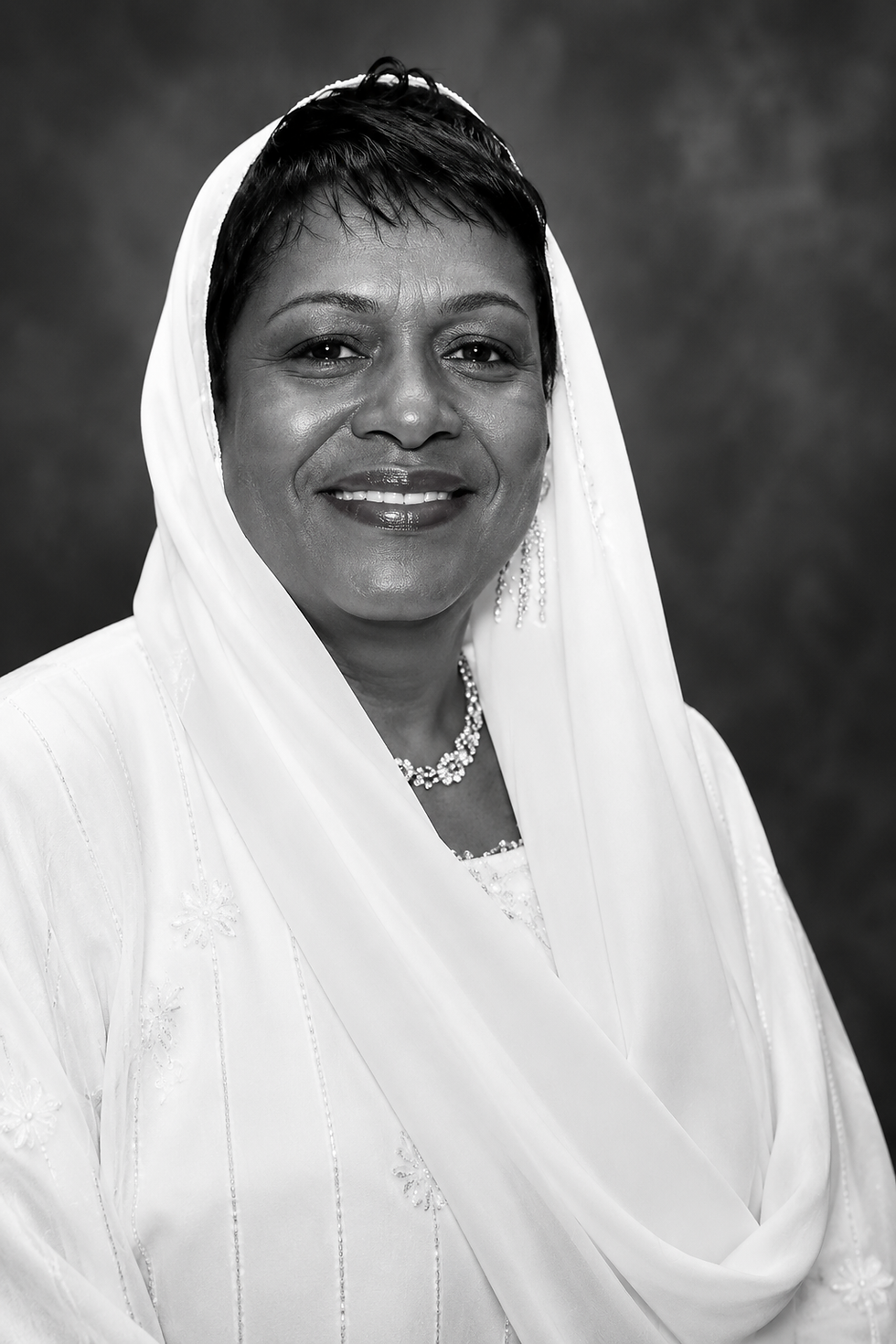
Long before the speeches, crowds, controversy and international attention, there was Betsy Ross, the childhood friend and high-school sweetheart who would become Mother Khadijah Farrakhan. She knew the man before much of the world knew the minister, and they married in 1953, beginning a journey together that would last more than seven decades.

Think about what 72 years of marriage represents. While the Honorable Minister Louis Farrakhan traveled, taught, organized and carried the pressures that came with his public ministry, Mother Khadijah Farrakhan was helping hold together the family that stood behind that mission. Those sacrifices may not always make the headlines, but they are part of the story because public service does not only affect the person standing behind the microphone. The family lives through it as well.
On June 27, 2026, Mother Khadijah Farrakhan returned to Allah at the age of 90 after 72 years of marriage to the Honorable Minister Louis Farrakhan. For anyone who has loved someone for decades, it is difficult to even imagine that loss. After so many years, that person becomes connected to nearly every chapter of your life—the memories, struggles, victories, disappointments, children, grandchildren and everything experienced along the way.

Then, only months later, another heartbreaking loss touched the Farrakhan family. Reports on September 19 announced the passing of Sister Betsy Jean Farrakhan, the eldest daughter and firstborn child of the Honorable Minister Louis Farrakhan and Mother Khadijah Farrakhan.
Sister Betsy Jean Farrakhan also had a story and contribution of her own. Her life included service within the Nation of Islam as well as a serious commitment to farming, agriculture and food production. She had previously been recognized as a first-generation farmer within the Farrakhan family, connecting her work to the larger importance of land, food and building something that can sustain our people.
When we speak about this family during a moment such as this, we should remember that behind the names are human beings. There is a husband grieving his wife, a father grieving his firstborn daughter, children grieving their mother, and family members grieving people they have known and loved for their entire lives. Regardless of fame, position or title, grief touches the human heart.
We See the Leader. The Family Sees the Man.

The public sees the podium, speeches, crowds, television cameras and public appearances. The family sees what happens when the microphone is turned off. They know the long nights, time away from home, missed family moments, pressure, criticism and responsibilities that come with carrying a public mission.
The public knows the Honorable Minister Louis Farrakhan as a religious leader and public figure, but his family knows the husband, father, grandfather and man behind that public responsibility. That is an important distinction because there are sacrifices made by families that the rest of us may never completely know or understand.
Regardless of where someone stands concerning the Honorable Minister Louis Farrakhan's theology, politics, controversial statements or public positions, his religious and community service has stretched across more than seven decades. His family has traveled much of that road with him, sharing both the victories and the burdens that came with it.
What Does Sacrifice Really Look Like?
For those of us who believe in God, this should cause us to think more deeply about the meaning of sacrifice. Jesus taught that anyone willing to follow him must be willing to take up his cross and follow him. The Holy Qur'an likewise teaches the believer that our prayer, sacrifice, life and death belong to Allah. These come from different religious traditions, but both give us something important to think about: faith eventually asks something from us.
Doing what we believe is right will not always be convenient. Sometimes it may cost money, comfort, friendships, popularity or opportunities. Sometimes it requires standing firm when doing so would be easier to avoid, and sometimes the people who love us also carry part of the weight that comes with the road we have chosen. That is when sacrifice moves beyond something we simply talk about and becomes something we actually live.
The Question Comes Back to Us
It is easy to celebrate leaders, but it is much harder to follow instructions and do the work. If we say we want stronger Black communities, then we have to ask what we are building. If we talk about economic independence, we should ask what businesses we are creating and supporting. If we say our children are our future, we should examine what we are teaching them. If we want healthier communities, we have to look at what we are doing with our own health. If food independence matters, we should ask what we are growing, and if we talk about unity, we should be able to point toward something we are actually building together.
At some point, our words have to produce something, and that becomes our report card. Sacrifice isn't always standing behind a microphone or becoming famous. Sometimes sacrifice is getting up every day and doing the work nobody sees—raising children, building businesses, growing food, teaching, mentoring, studying, organizing, correcting ourselves and continuing to work even when nobody applauds.
More Than Admiration
The journey of the Honorable Minister Louis Farrakhan, from a young entertainer in the 1950s to a minister whose public life has extended for more than 70 years, leaves us with a question worth asking ourselves: What are we willing to sacrifice for something greater than ourselves?
People will continue to agree and disagree with the Honorable Minister Louis Farrakhan, and that is part of his historical record. His career has brought deep admiration from supporters as well as strong criticism from opponents. A serious student should be willing to study the complete record—the accomplishments, controversies, teachings, decisions, criticism, personal costs and the family that traveled the road alongside him.
But there are also moments when our humanity should come before debate, and the loss of loved ones is one of those moments. BLXCR extends our deepest condolences to the Honorable Minister Louis Farrakhan, the entire Farrakhan family, the Nation of Islam and everyone mourning the loss of Sister Betsy Jean Farrakhan. We also continue to remember Mother Khadijah Farrakhan, the childhood sweetheart who became his wife and traveled beside him through more than seven decades of marriage.
May Allah grant comfort, strength and peace to the Honorable Minister Louis Farrakhan and the entire Farrakhan family during this difficult period. May their journey also cause each of us to examine our own lives and ask what sacrifice looks like in us, because sacrifice isn't simply about what we're willing to say. It is what we're willing to give, what we're willing to endure, and most importantly, what we're willing to do in service to something greater than ourselves.
One Village. One Fight.


Comments