

When a Community Refused to Wait. What Gary, Indiana, Can Teach Us About Coming Together pt.2


Sometimes the most important story coming out of a disaster is not only what went wrong. Sometimes it is what people decide to do next.
On August 11, 2026, a powerful derecho tore through northern Illinois and Northwest Indiana. The National Weather Service recorded a 99 mph wind gust at Gary/Chicago International Airport, while later assessments estimated winds reaching 100 to 110 mph in portions of the region.
Trees came down. Utility lines were damaged. Homes and businesses were affected.
Thousands of residents were left without electricity, and for many families, the hardship continued long after the storm had passed.
Gary, Indiana, became one of the communities hit especially hard by the aftermath.
More than a week later, residents were still dealing with spoiled food, interrupted schools, damaged property and prolonged power outages. Those conditions raised legitimate questions about infrastructure, emergency preparedness and how quickly communities receive help when disaster strikes.
Those questions deserve attention.
But they are not the entire Gary story.
A Call for Help Became Action
As attention grew around what residents were experiencing, food critic and social media personality Keith Lee used his platform to bring greater visibility to Gary and committed $15,000 toward relief.
Indiana Pacers star Tyrese Haliburton matched Lee's contribution with another $15,000, bringing their combined commitment to $30,000.
From there, something bigger began taking shape.
The City of Gary, The Salvation Army, Ace Hardware and other organizations joined an emergency community relief effort held August 24 at Roosevelt Pavilion.
But money and recognizable names alone did not make the event successful.
People did.
Local businesses showed up. Food vendors showed up. Community organizations showed up. Volunteers showed up. Residents helped residents.
Thousands eventually came through the relief event.
Organizers distributed approximately 2,000 emergency-supply buckets, along with roughly 1,000 meals and 1,000 drinks. The Salvation Army provided recovery supplies that included cleaning products, gloves, sponges, mops and other necessities families could use as they recovered from the storm.
Those numbers tell us the size of the operation.
The people behind those numbers tell us what the story really means.
The Community Behind the Effort

Local reporting documented entrepreneurs, restaurants, nonprofits and small businesses contributing to the relief effort.
Some prepared food with little notice. Others donated products, necessities or their time. Community organizations worked alongside larger institutions while volunteers helped distribute supplies and serve residents.
One local restaurant participated even after experiencing its own electrical problems from the storm.
Think about what that represents.
People who had experienced hardship themselves were still finding ways to help somebody else.
That changes how this story should be understood.
This was not simply a celebrity arriving in Gary to rescue a struggling community.
Keith Lee used his influence as a catalyst. Tyrese Haliburton contributed resources. The Salvation Army and other organizations provided infrastructure and supplies. The City of Gary helped coordinate the effort.
But local people helped bring it to life.
Cooks prepared food. Business owners contributed what they could. Volunteers worked the grounds. Organizations distributed necessities. Residents stood beside other residents who were facing many of the same challenges.
Everybody brought something to the table.
That is what community looks like.
Facts Don't Need Exaggeration
Following the event, Lee thanked what he described as more than 40 food trucks, more than 10 companies, hundreds of volunteers and more than 50 national media outlets for participating in or covering the effort.
There is strong independent reporting confirming that dozens of food vendors and businesses participated and that thousands of people attended.
However, we have not located an independent master list verifying every one of Lee's exact post-event totals.
Therefore, those particular numbers should remain attributed to Keith Lee.
That distinction is important.
We don't have to make a good story bigger than it is to make it meaningful.
The verified facts are already powerful.
The Stories We Share Can Plant Seeds

There is another lesson in what happened in Gary that reaches beyond one city.
When good work happens in our communities, it deserves to be seen.
Too often, people become familiar with communities through their most difficult moments—crime, poverty, failing infrastructure or tragedy. Those realities should never be ignored, but neither should they become the only picture people see.
Gary gave us another picture.
People gave what they could. Businesses contributed resources. Food vendors prepared meals. Volunteers offered their time. Organizations worked together, and people who were dealing with their own challenges still found enough compassion to help somebody else.
Stories like this matter because good news can plant good seeds.
When people in another neighborhood see what happened in Gary, the lesson doesn't have to be, "Look what somebody did for them."
The lesson can become, "We can do something like that here."
Maybe another business owner decides to donate. Maybe a restaurant feeds families during the next emergency. Maybe several organizations that normally work separately realize they can accomplish more together. Maybe someone with a large platform recognizes that influence carries the power to mobilize people for something greater than themselves.
That is how an example travels beyond the place where it began.
Positive community news should never mean pretending problems don't exist. It means making sure struggle isn't the only story we tell about ourselves.
Sometimes people need to see cooperation before they believe cooperation is possible.
Gary showed what can happen when resources, influence, businesses, organizations, volunteers and everyday people come together around a common purpose.
And when we share stories like this, perhaps another community will look at Gary—not simply as a city that needed help, but as an example of what good people can accomplish when they decide to help one another.
Good People Coming Together
Keith Lee deserves credit for using his platform and resources to bring additional attention to Gary.
Tyrese Haliburton deserves credit for matching the financial contribution.
The Salvation Army, City of Gary, Ace Hardware and the other participating organizations deserve recognition for helping transform an idea into an organized relief operation.
But there is another group whose names may never become headlines.
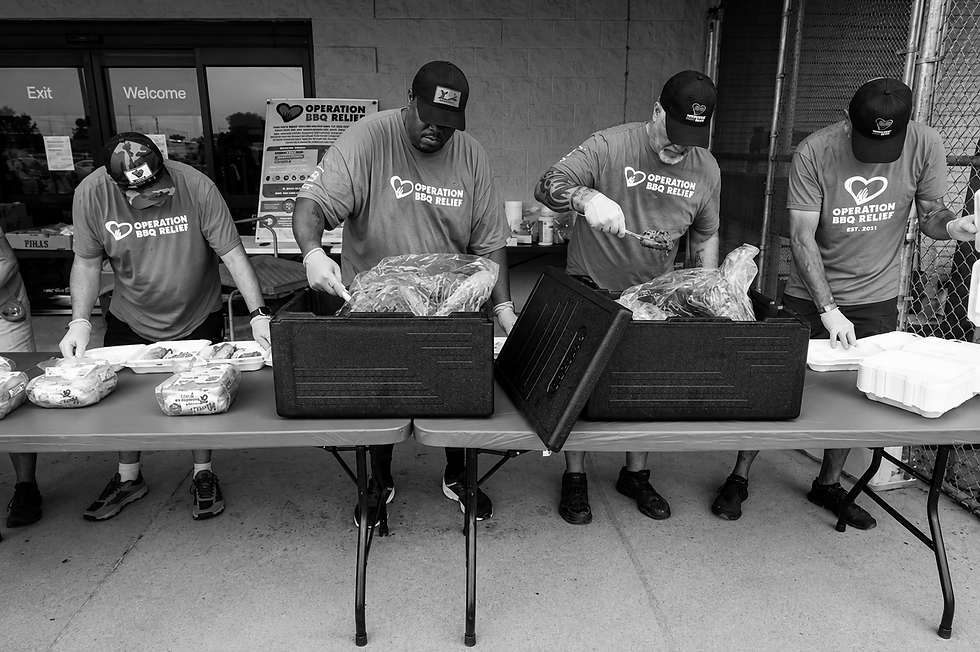
The cooks.
The volunteers.
The business owners.
The community organizations.
And the residents who helped somebody else while facing their own difficulties.
They are part of this story too.
In Gary, the truth includes a devastating storm, prolonged outages, frustrated residents and legitimate questions about infrastructure and recovery.
But that's not where the story ends.
It also includes thousands of people coming together and demonstrating what can happen when individuals, businesses, organizations and community members decide that somebody else's problem is also their concern.
There is something worth carrying forward from Gary.
We don't always have to wait for one person, one organization or one institution to solve everything. Sometimes progress begins when people look around at what they already have—their businesses, their kitchens, their resources, their platforms, their organizations and, most importantly, one another—and decide to put those things to work.
Good stories can plant good seeds.
And perhaps somewhere else, somebody will see what happened in Gary and realize:
If good people can come together and make something happen there, we can make something happen here too.


Comments